
How to trade NFP. Lessons from October's jobs day.
Peak Performance Trading · · 8 min read
You trade NFP well by planning the day before the number, not after it. Decide which part of the report the market cares about this month, write down what you'll do if it comes in strong, in line or weak, and stay out for the first minutes while spreads are wide and the first spike settles. The report moves markets because it changes what traders expect the central bank to do.
The October 2026 jobs report
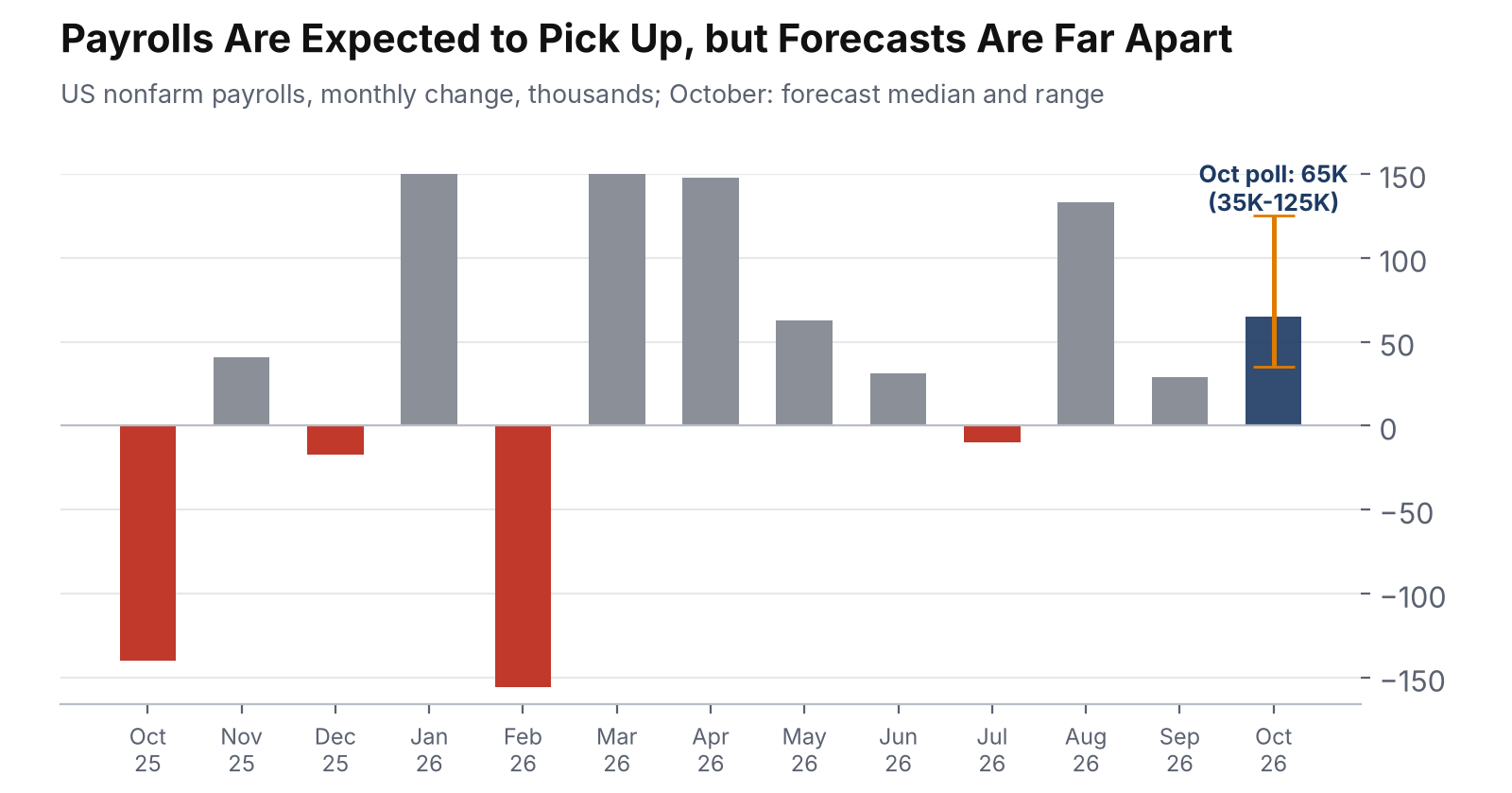
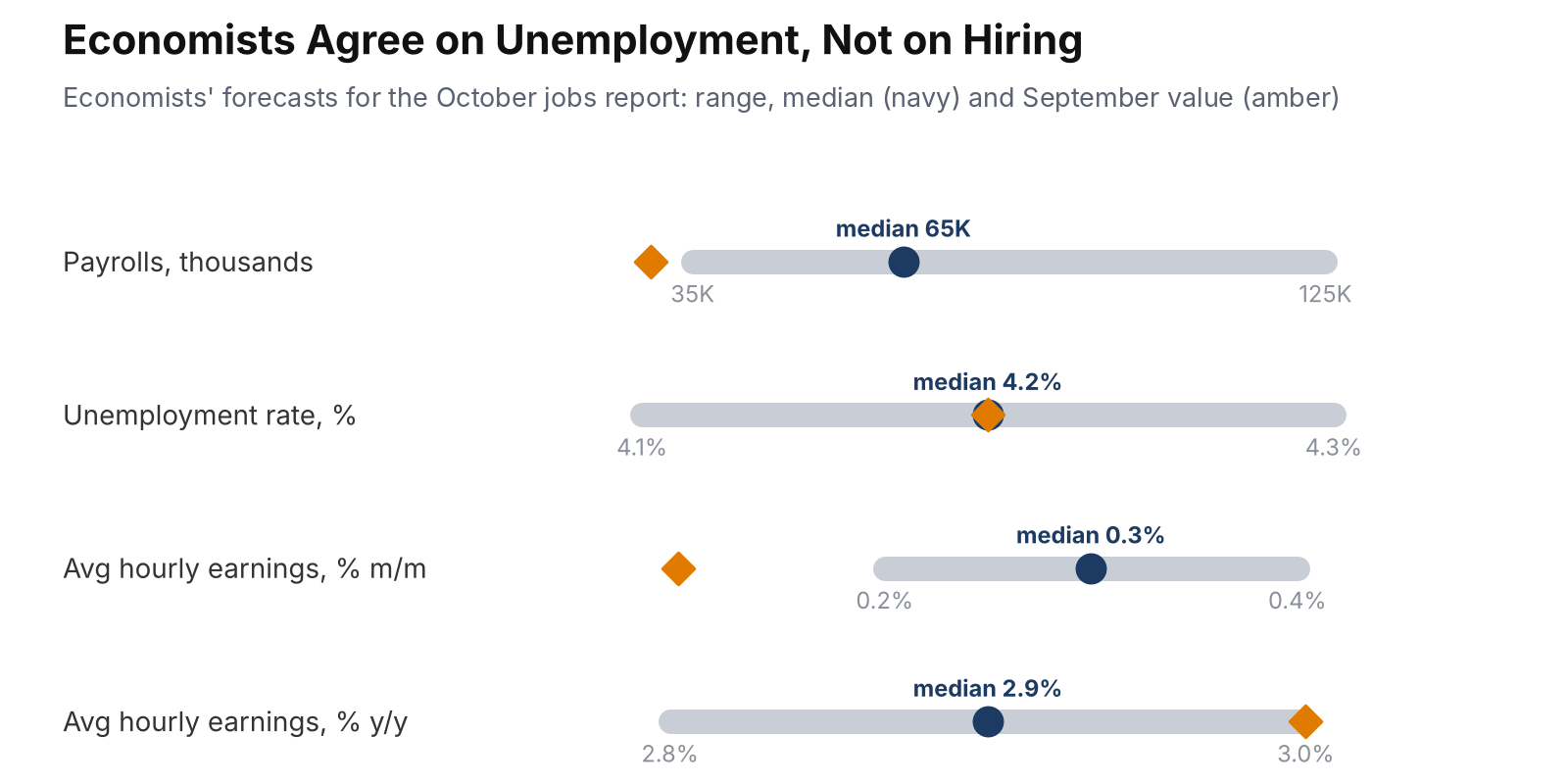
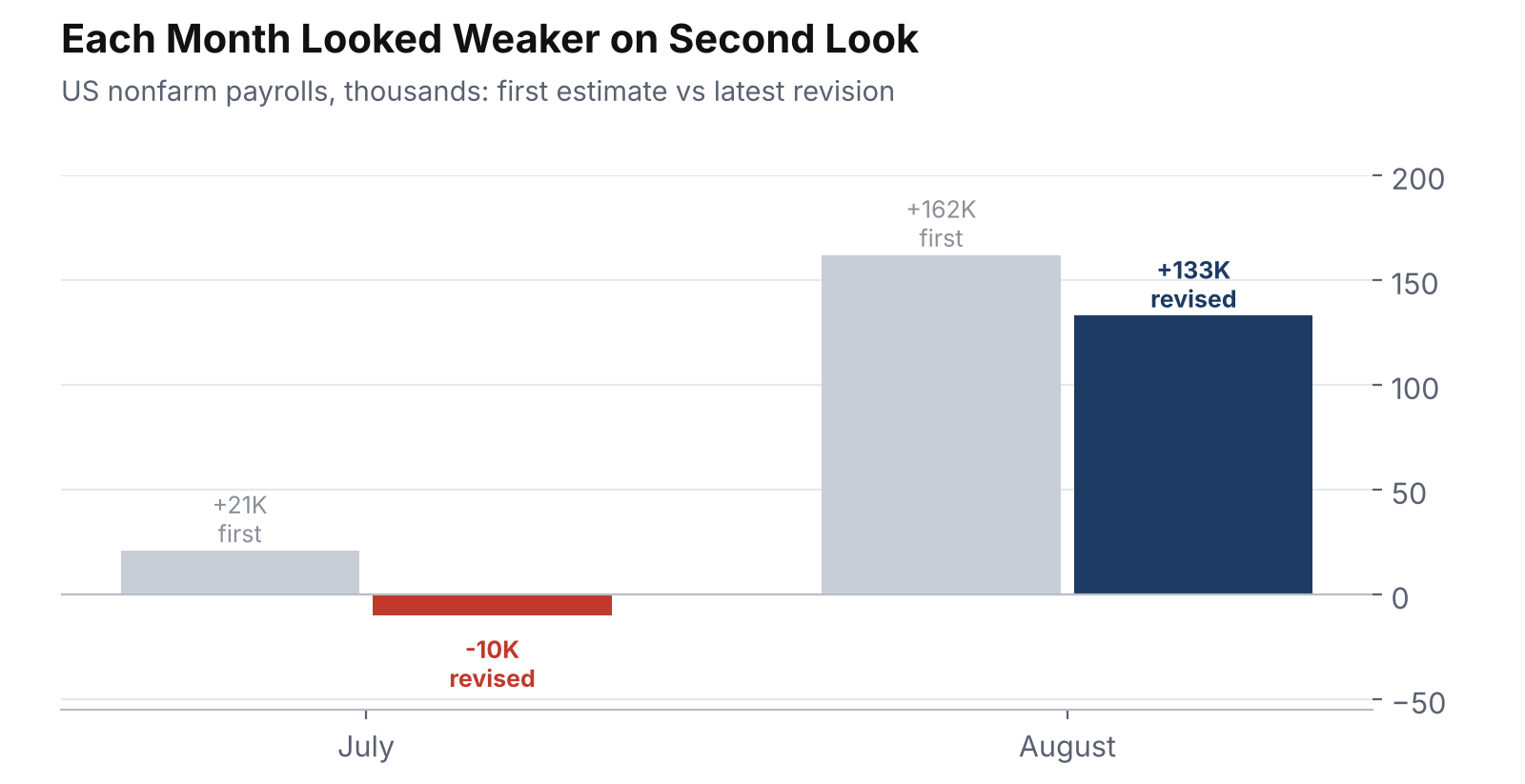
The US October jobs report comes out on Friday, 6 November 2026, at 8:30 a.m. ET. In the month before, payrolls rose only 29,000, unemployment climbed to 4.2%, and the two previous months were revised down by a combined 60,000. The poll median for October is 65,000 jobs, with forecasts running from 35,000 to 125,000.
That range is a lesson on its own. Economists who study this full time disagree by almost 100,000 jobs.
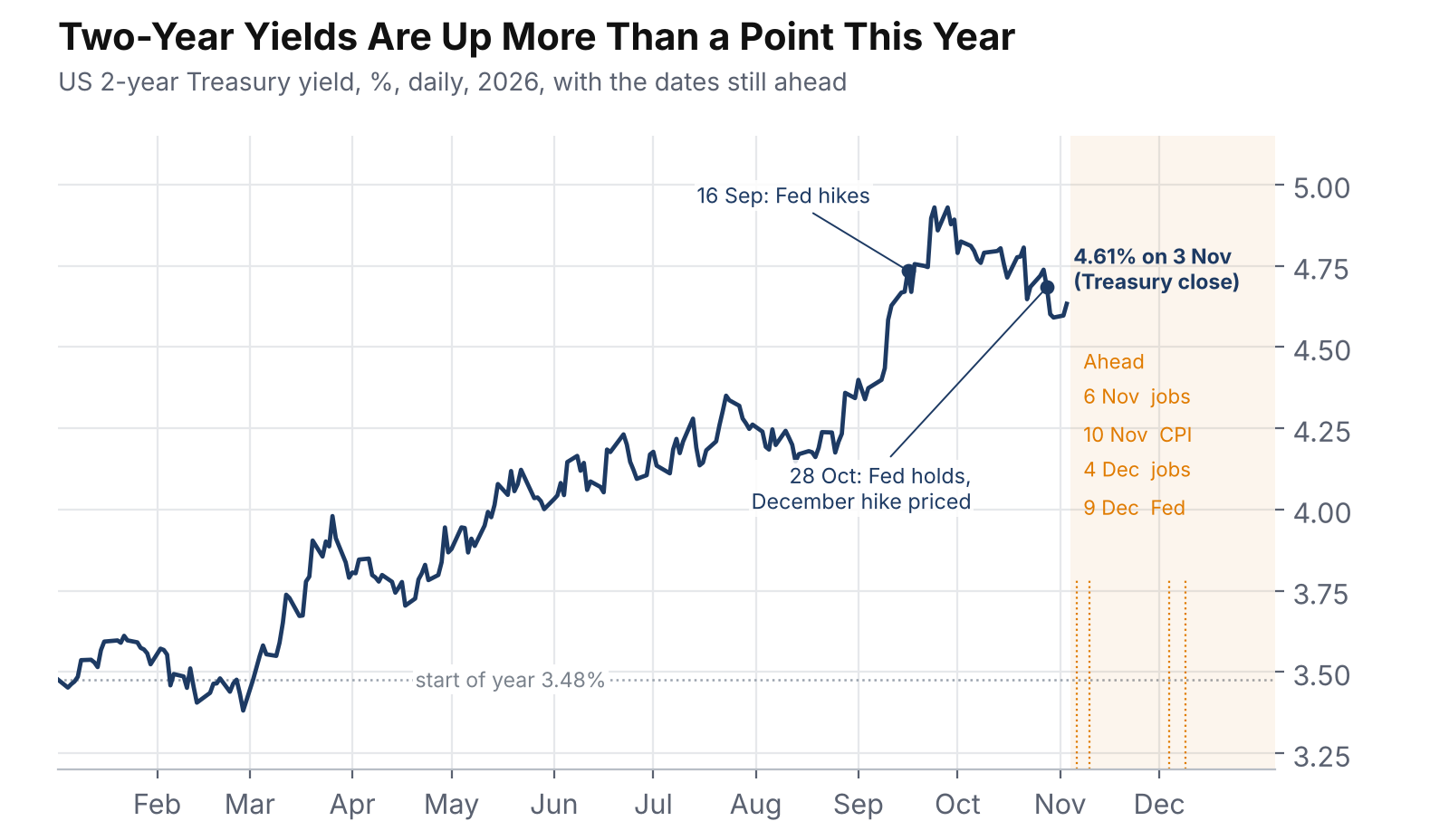
What makes this report unusual is where the Fed stands. It raised rates in September, and markets price another hike in December, because energy prices are pushing inflation up.
What NFP means in trading
NFP stands for nonfarm payrolls: the number of jobs the US economy added or lost in the previous month, leaving out farm workers and a few other groups. The Bureau of Labor Statistics publishes it in the Employment Situation report, usually on the first Friday of the month at 8:30 a.m. Eastern time.
The market reads several numbers in the report together:
- Payrolls: jobs added or lost, from a survey of employers.
- Unemployment rate: from a separate survey of households.
- Average hourly earnings: wage growth, month on month and year on year.
- Revisions: changes to the two previous months. These can be as big as the new number.
Which one moves the market depends on the moment. When the central bank is worried about inflation, wages matter most. When it's worried about a slowdown, the unemployment rate takes over. Right now the Fed is hiking against energy-driven inflation, so traders are watching whether wages and payrolls are firm enough to justify another hike.
Why the jobs report moves the dollar
Currencies follow interest rate expectations. A strong labor market gives the Fed room to hold rates high or raise them. Higher expected US rates mean dollar assets pay more, so the dollar tends to rise. A weak report does the reverse.
You can see this most cleanly in the 2-year Treasury yield, which tracks Fed expectations closely. On 3 November 2026 it stood at 4.61%. On jobs day, watch it next to the dollar. If the dollar rises and the 2-year doesn't, the move may not last.
The surprise is what counts
The market doesn't react to 60,000 jobs. It reacts to 60,000 against what it expected.
Before the release, forecasts get collected into a consensus, and prices already reflect it. A number close to consensus causes a small move. One far from it, in either direction, causes a large one.
Read the whole report. A strong headline with weak wages and a big downward revision isn't a strong report. A weak headline with a falling unemployment rate isn't a weak one. The market needs a few minutes to take all of it in, which is one reason the first move is often wrong.
Why the first spike often reverses
Plenty of traders have watched the dollar jump in the first second after NFP and give it all back within the hour. There are three common reasons.
- Headline vs details. Algorithms trade the headline first. Then people read wages, the unemployment rate and the revisions. If the details disagree with the headline, the move reverses.
- Revisions. Downward changes to the previous two months can erase a good month. In the September 2026 report, July and August were revised down by 60,000 combined. That shifts the picture more than any single month.
- Liquidity. In the first minutes, banks and market makers pull back. Prices jump instead of stepping. The first spike can travel a long way on very little volume, then snap back once normal liquidity returns.
Spreads and slippage in the first minutes
For a short window on jobs day, trading gets a lot more expensive.
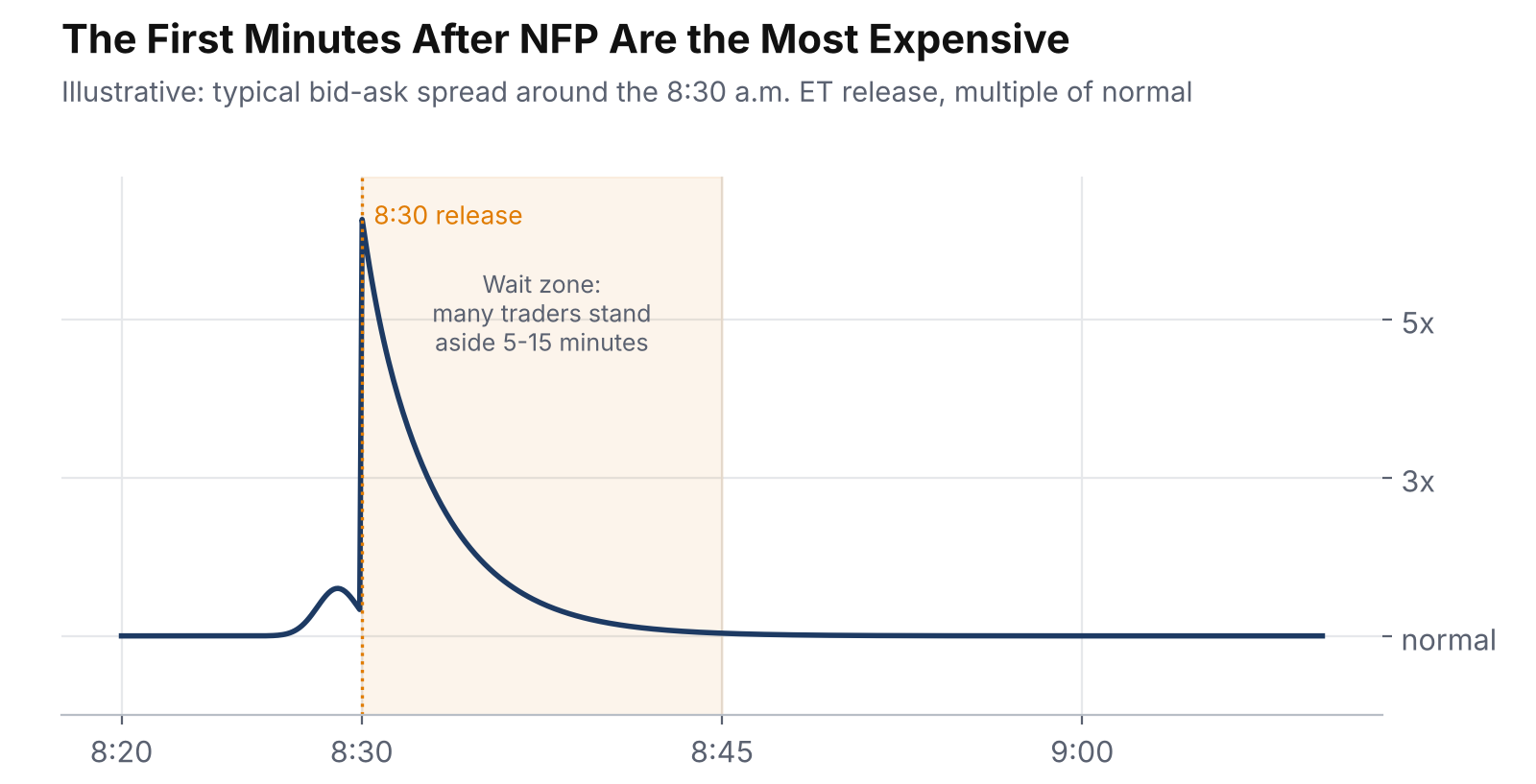
- Spreads widen. Right at 8:30 the gap between buy and sell prices can be several times wider than normal.
- Slippage grows. A market order or stop can fill well away from the price you saw.
- Stops get run. A fast spike can trigger stops on both sides within seconds.
An illustrative example. You place a stop 15 pips from your entry. In normal conditions, getting stopped costs you about 15 pips. In the first seconds after NFP, the same stop might fill 25 or 30 pips away. You planned one size of risk and took a loss twice as large. Your idea wasn't wrong. Your timing was.
How traders plan NFP day
- Write your scenarios the day before. For example (illustrative): "Strong, above 100,000 with firm wages: hike pricing rises, dollar up. Weak, below 30,000 or a rise in unemployment: hike pricing falls, dollar down, gold up. In line: no trade." The point is that you've decided what each outcome means before you see it.
- Know which number matters this month. In November 2026 it's wages and the unemployment rate, because they decide whether the Fed hikes again.
- Mark levels as context, not targets. Note the day's high and low and the prior day's range in the pairs you follow. They tell you whether the reaction is breaking out or staying inside the range.
- Stay out for the first minutes. Many experienced traders do nothing for at least 5 to 15 minutes after the release. They wait for spreads to normalize and for the market to read the details.
- Cut size, or stay flat. If you hold a position into the release, size it so a gap through your stop doesn't break your daily limit. Being flat is a valid plan.
- Trade the second move, if there is one. Once the market has absorbed the report, a move that holds in the direction of your scenario means more than the first spike.
How NFP feeds Fed expectations
The jobs report is one of the main inputs into the Fed's next decision. After each release, markets reprice the odds of the next move.
In November 2026 that matters more than usual. Fed funds futures price about a 78% chance of a December hike (3 November). A strong October report keeps that probability high. A weak one gives the Fed a reason to wait. And there's a November report on 4 December, five days before the Fed decides on 9 December, so October's number isn't the last word.
Check the probability before and after the release. The change tells you what the market learned.
A surprise means outside the whole range
The median forecast isn't the bar that matters. Economists' forecasts for October payrolls run from 35,000 to 125,000. A number inside that range is mostly priced, even far from the median. A number outside it forces the market to change its view of the Fed, and that's when the larger, longer-lasting moves happen.
Wages decide whether inflation sticks
An energy shock raises prices once. It turns into lasting inflation only if wages follow. That's why average hourly earnings can matter more than the headline in 2026. Firm wages support the case for more Fed hikes. Soft wages let the Fed argue the shock is passing.
Trust money over opinions
Surveys and forecasts tell you what people think. Futures prices tell you where money is committed. Fed funds futures show how many hikes are priced, and the two-year Treasury yield shows how that pricing shifts day by day. Watch both before and after the report and you'll see whether the market actually changed its mind, beyond whether the number was strong or weak.
Common NFP mistakes
- Trading the headline before reading wages and revisions.
- Placing tight stops just before 8:30 and getting filled far away.
- Chasing the first spike, then revenge trading when it reverses.
- Assuming "good jobs = stocks up". It depends on what the Fed is expected to do.
- Treating one report as a trend. Look at three months and the revisions.
Your NFP day checklist
- What's consensus for payrolls, unemployment and wages?
- Which number matters most this month, and why?
- What are my strong, in line and weak scenarios, and what does each mean for the Fed?
- What's my position size into the release, and can I live with a gap through my stop?
- How long will I wait after 8:30 before acting?
- Did the Fed probability change, and does the second move confirm my scenario?
- After the day: did I follow the plan?
Getting feedback on your NFP plan
The plan you write before NFP and the calls you make after it are both worth a second look. In private 1-on-1 trading mentoring, a mentor goes through your event plan before the release and your decisions afterwards, so you can see where your process held up.
FAQ
What is NFP in trading?
NFP, or nonfarm payrolls, is the monthly change in US jobs outside farming, published by the Bureau of Labor Statistics. Traders read it alongside the unemployment rate, wage growth and revisions to judge the labor market. It moves markets because it changes expectations for the Federal Reserve's next interest rate decision.
What time is the jobs report released?
At 8:30 a.m. Eastern time, which is 13:30 GMT in winter, usually on the first Friday of the month. The October 2026 report comes out on Friday, 6 November 2026, and the November report on Friday, 4 December 2026.
Why does NFP move the dollar?
Because it changes what traders expect from the Fed. A strong report makes higher US interest rates more likely, and that makes dollar assets more attractive. A weak report does the opposite. The 2-year Treasury yield, which follows Fed expectations closely, usually moves the same way as the dollar after the release.
Should beginners trade NFP?
Most beginners should watch the release rather than trade it. Spreads widen, fills slip and the first move often reverses, so planned risk can double. Watching several releases, writing scenarios and comparing them with what happened builds the judgment you need before you put money at risk on the day.
Why does the market reverse after NFP?
The first move trades the headline, and the details can disagree with it. Wages, the unemployment rate and revisions to earlier months can change what the report means. Liquidity is also thin in the first minutes, so prices overshoot and snap back once normal trading returns.
For the numbers going into Friday's release, read the Prime Terminal October 2026 jobs report preview.
Education and mentoring. No trading guarantees.